
Around Kuching
Semenggoh Wildlife Centre (Our favourite)
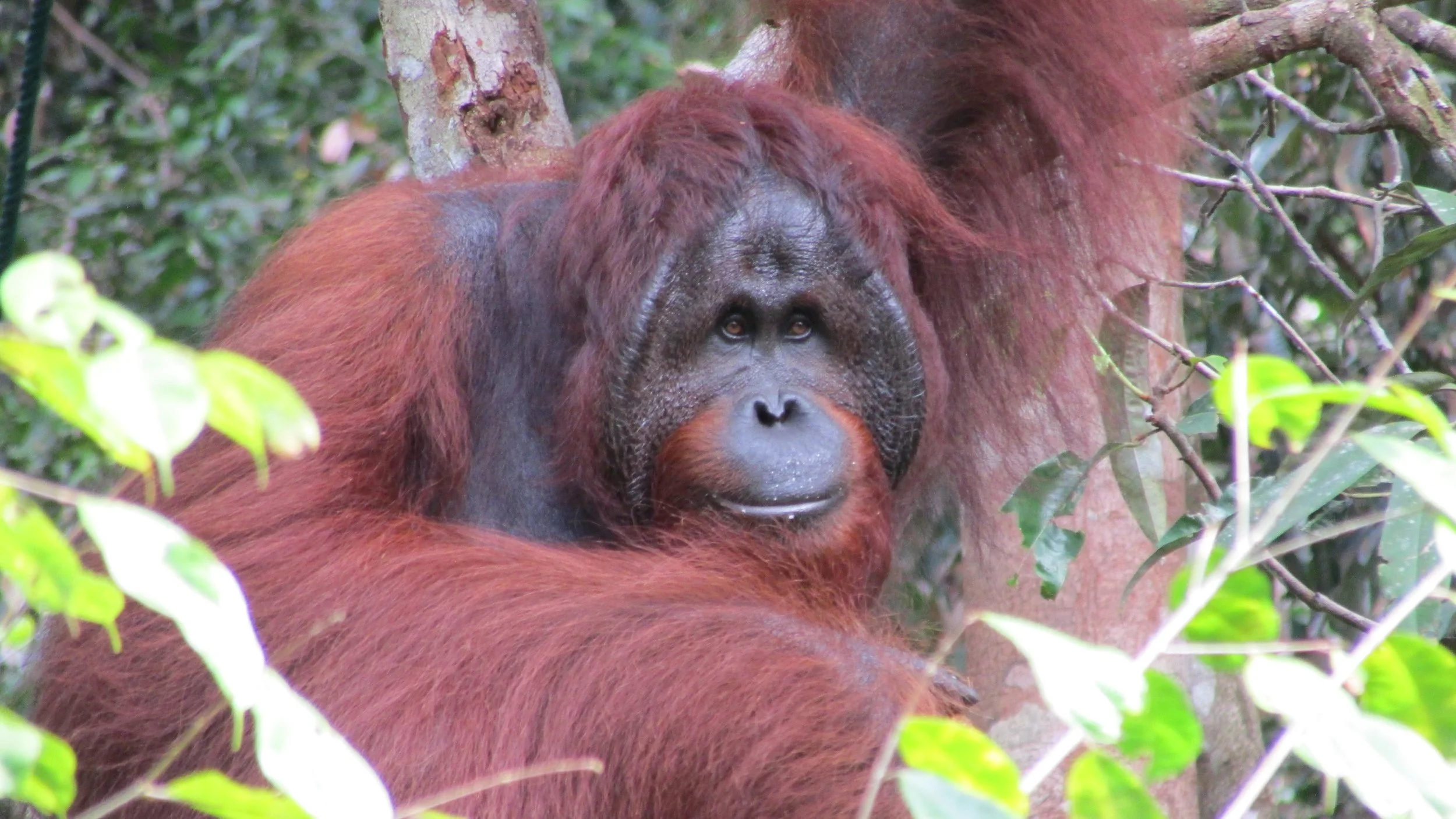
About 30 minutes from Kuching, and one of our absolute favourite places to take visitors. This is where you have the chance to see orangutans living freely in the forest.
Sightings are not guaranteed — particularly during fruiting season when they have plenty of food in the forest — but when they do appear, it’s a really special experience. Feeding times are typically in the morning and afternoon, and it’s best to arrive early and be patient.
This feels very different from a zoo or enclosed environment — you’re in their space, not the other way round — which is exactly what makes it so memorable.
We’ve been visiting on and off for the last 19 years and saw orangutans each time we’ve come. We’ve not been so lucky this trip as it’s still fruit season and so the orangutans are well-fed in the jungle - great for them and proves the rehabilitation programme is working but not so good for us or our visitors. Although we didn’t see orangutans on our recent trip, we did see turtles, a large monitor lizard, spiders, lots of large carpenter bees and even a small Borneo Keeled Pit viper.
Getting there - Semenggoh is about 30–40 minutes from Kuching, depending on traffic, and there are a few different ways to get there depending on how easy or flexible you want it to be.
You need your passport details to register but you can register in advance, show them the QR code and make a payment when you arriving - you can also pay online. If you buy a ticket for the morning, you can use the same ticket to visit again in the afternoon. From the park entrance you can either walk to the viewing area (about 20 minutes) or pay extra and get an electric land train. There’s a small cafe and shop near the parking station for the shuttle train.
Getting there
Grab / Taxi (Easiest option)
This is by far the simplest way to get there. A Grab from central Kuching usually takes around 30–40 minutes and is relatively inexpensive (roughly RM25–RM35 each way).
It’s not always so easy to get a Grab back unless you book it in advance so an option would be to get a taxi out and the free bus back
Free Bus (Kuching Metro Route 103) (Budget option)
There is a free electric bus (Route 103) that runs from Kuching to Semenggoh.
Takes around 1.5 hours as it loops around the city
Air-conditioned and comfortable
Runs at fixed times (first departures early morning, last return around 4pm)
It’s a good option if you’re not in a rush, but you do need to plan carefully — especially for the return journey, as buses leave on time and you may need to leave the feeding area earlier than you’d like.
Local Bus (K6) (Less flexible but quicker than 103)
There is also a more direct public bus (K6) from the city:
Leaves in the morning (around 7:15–7:20am) and early afternoon
Takes around 40 minutes
Drops you near the entrance
Organised Tour (Most straightforward)
Many local operators run half-day tours that include:
Transport
Entrance
Timing around feeding sessions
This is the easiest option if you don’t want to think about logistics, but you lose a bit of flexibility and it’s certainly much more expensive than any of the other options.
Sarawak Cultural Village -https://scv.com.my/en/
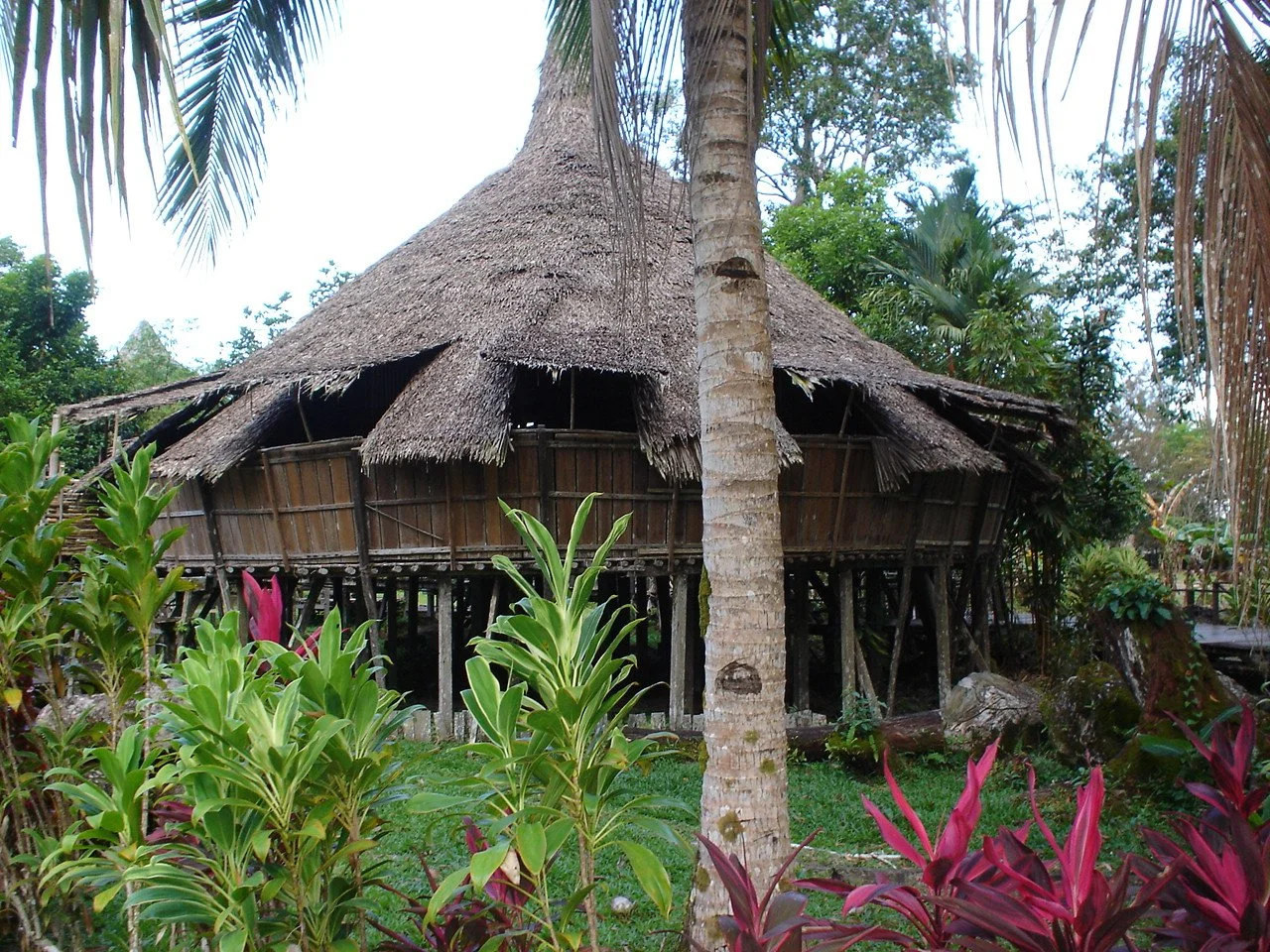
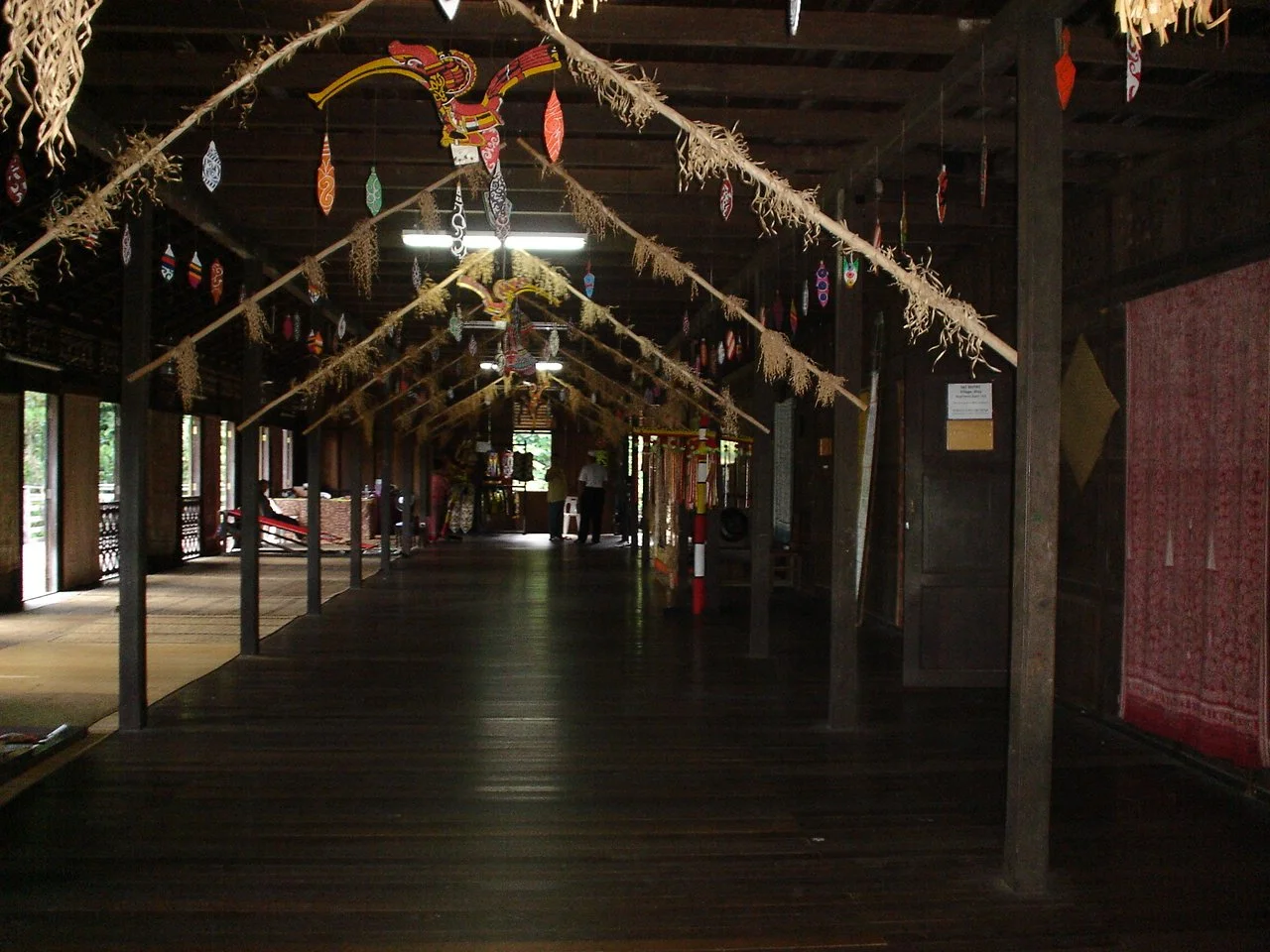
About 45 minutes from Kuching, this “living museum” showcases the different cultures of Sarawak. There are traditional buildings representing groups such as the Bidayuh, Iban, Melanau, Malay, Chinese, Orang Ulu, and Penan, each set out as you would have found them traditionally.
You can walk through each of the houses, and there are usually small demonstrations taking place — things like cooking, weaving, music, and traditional crafts — which help bring it to life rather than it just being a series of buildings. The setting itself is lovely, with Mount Santubong as a backdrop, and it’s easy to move around at your own pace.
The visit normally ends with a cultural show of music and dance, which is well done and gives a good overview of the different traditions in one place. There’s also a café and small gift shop on site if you want to spend a bit more time there.
It’s a good introduction for first-time visitors, particularly if you want a broad overview of the different cultures in Sarawak in one place. On our last visit it felt a little more run down than before, but friends who’ve been more recently have said there’s been some improvement work, so it may now feel fresher again. This is the location of the Rainforest World Music Festival each year.
Matang Wildlife Centre
A rehabilitation centre about 25 minutes from Kuching, and somewhere we often take visitors during fruiting season if we haven’t seen orangutans at Semenggoh.
Unlike Semenggoh, this is a more enclosed environment and you are almost guaranteed to see wildlife, which makes it a reliable backup option.
It’s a worthwhile visit, particularly if you want to ensure you see orangutans and learn more about rehabilitation work. However, it does feel more like a traditional wildlife centre and, in places, a little run down compared to some of the more well-funded sanctuaries.
That said, the focus here is on caring for animals that cannot be released, and it still offers a valuable insight into conservation work in Sarawak.
Sarawak Cooking Class (Indah Café)
A really enjoyable and hands-on way to experience local food. The session usually starts with a visit to a local market, where you’re introduced to the herbs, vegetables, and ingredients used in Sarawak cooking.
You’ll learn how many of these ingredients are used not just in cooking but also for their medicinal properties, particularly important for communities living in more remote areas.
After the market, you return to Indah Café to prepare a range of dishes, typically including Sarawak laksa, gula apong chicken, midin (jungle fern), pineapple kerabu, and nasi ulam. You then sit down to eat what you’ve prepared — relaxed, social, and a great way to experience local food beyond restaurants.
Siniawan
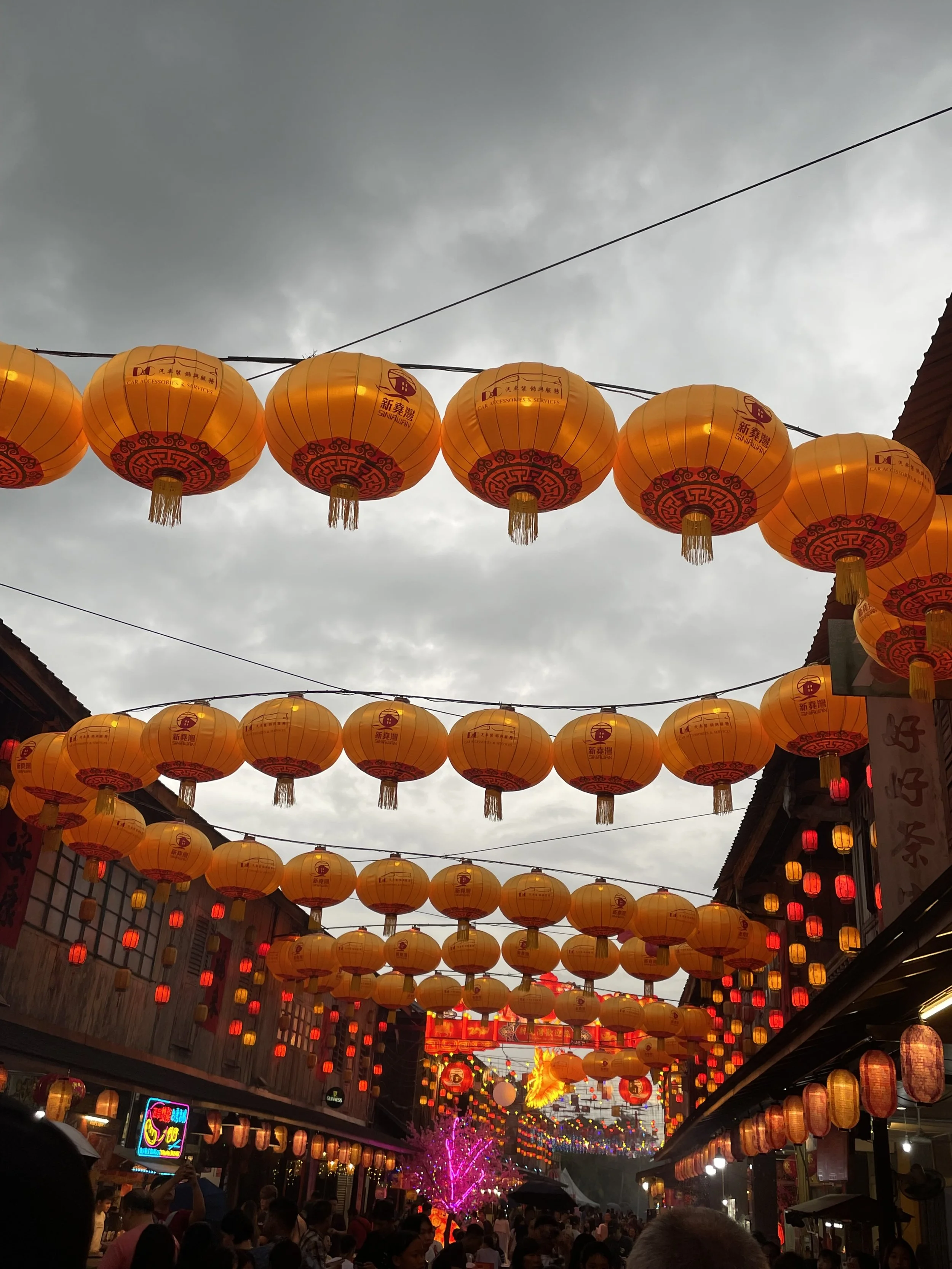
A traditional town about 30 minutes from Kuching, originally built in the 1820s as a trading post when boats could only travel this far upriver. The old wooden shop houses still stand today and have been converted into small restaurants and food stalls.
It really comes to life in the evenings, particularly at the weekend when the street turns into a lively night market with a great variety of food. Around Chinese New Year it’s especially atmospheric, with lanterns and decorations adding to the setting. They also hold a huge festival there each year for Chap Goh Mey.
We always stop for a drink at Bikalan — Andy, the English owner, is incredibly welcoming and always happy to share the history of the town, which adds another layer to the visit. There’s lots of info and photos on the FB page for the Bikalan.
Kubah National Park – Night Frog Walk (One of our absolute highlights)
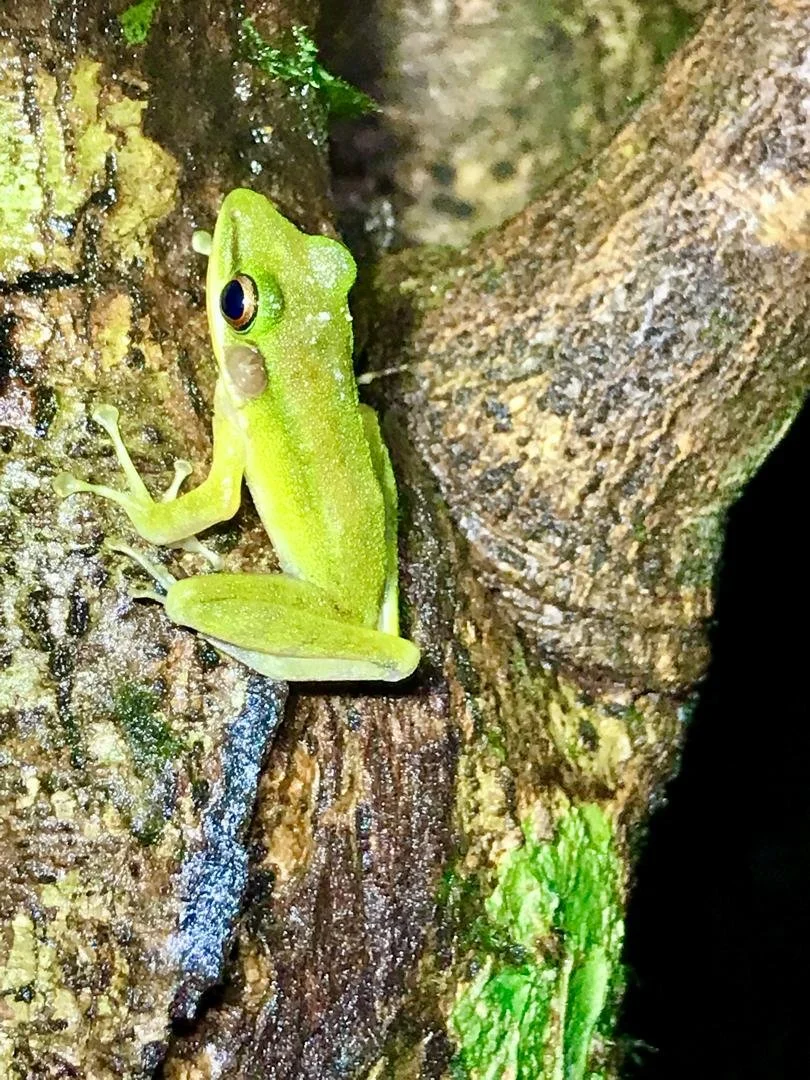
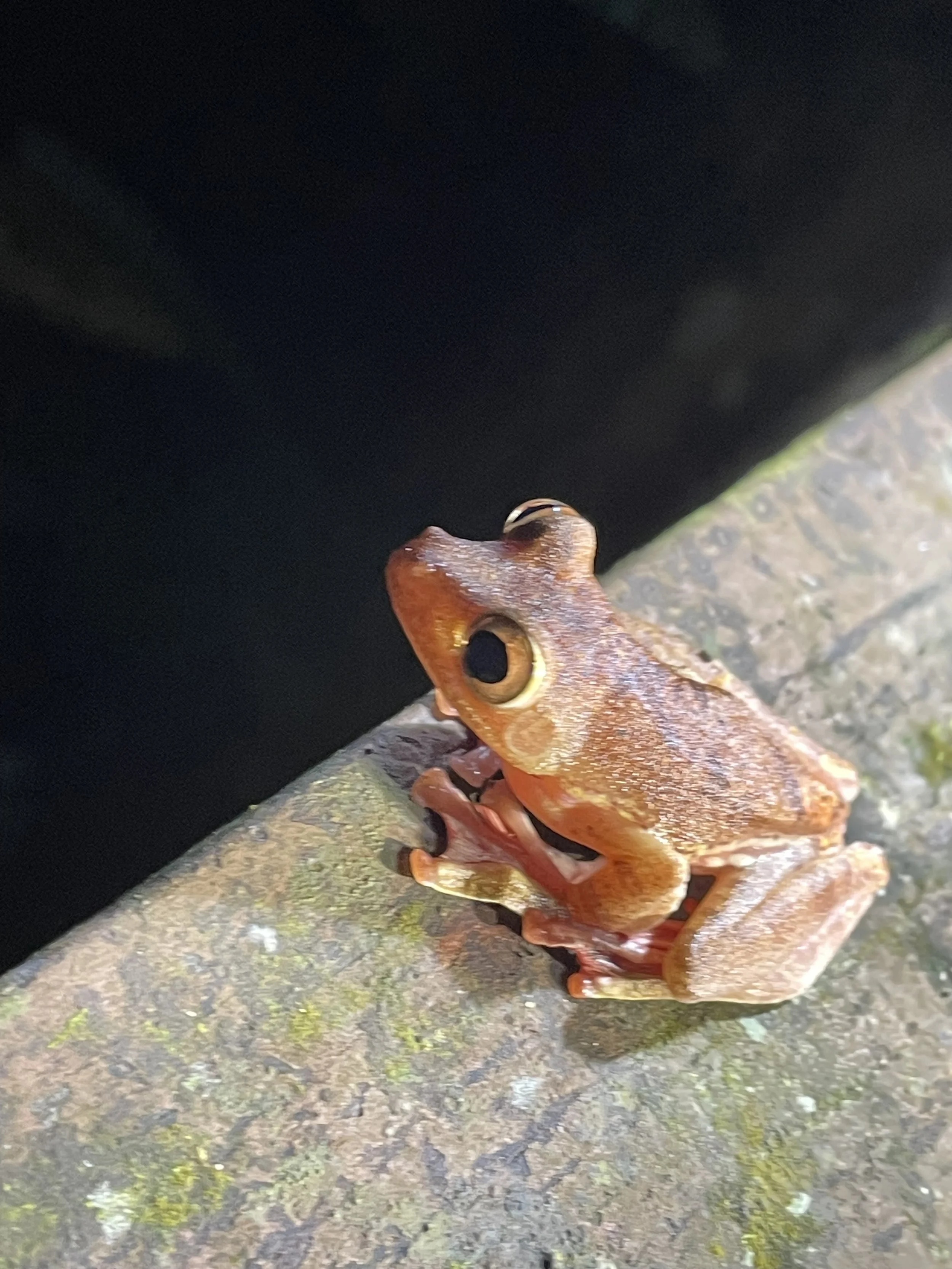
About 40 minutes from Kuching, and one of the most memorable things we’ve done here — we always recommend it to visitors. We usually arrange this through our friend Chris, who runs a local Airbnb (I’ll add his details separately), and it’s well worth doing with someone who knows the area. He brings a frog specialist with him.
The walk lasts around 1.5 to 2 hours and takes place after dark. There is an incredible range of wildlife in the park, particularly frogs, along with insects, birds, and reptiles.
What makes it so special is the variety — you genuinely have no idea what you’re going to see next… or how the specialists spot them. On our most recent walk (just a couple of weeks ago), we saw over 25 different species, including orb-weaver spiders, huntsman spiders, forest stick insects, several types of frogs from tiny tree frogs to larger stream frogs, fireflies, lizards, geckos, and even birdlife along the way.
There’s also a frog pond area which is one of the best places to stop and observe multiple species in one place. The sound alone is incredible — like standing in the middle of a rainforest orchestra.
The walk starts with a fairly steep uphill section, so decent shoes are needed, and it can be slippery after rain, but it’s absolutely worth the effort. This isn’t a staged experience — it feels completely natural and a bit unpredictable, which is exactly why it’s so good. You do need a torch … and a decent camera.
Trombol Beach & Sampadi Beach
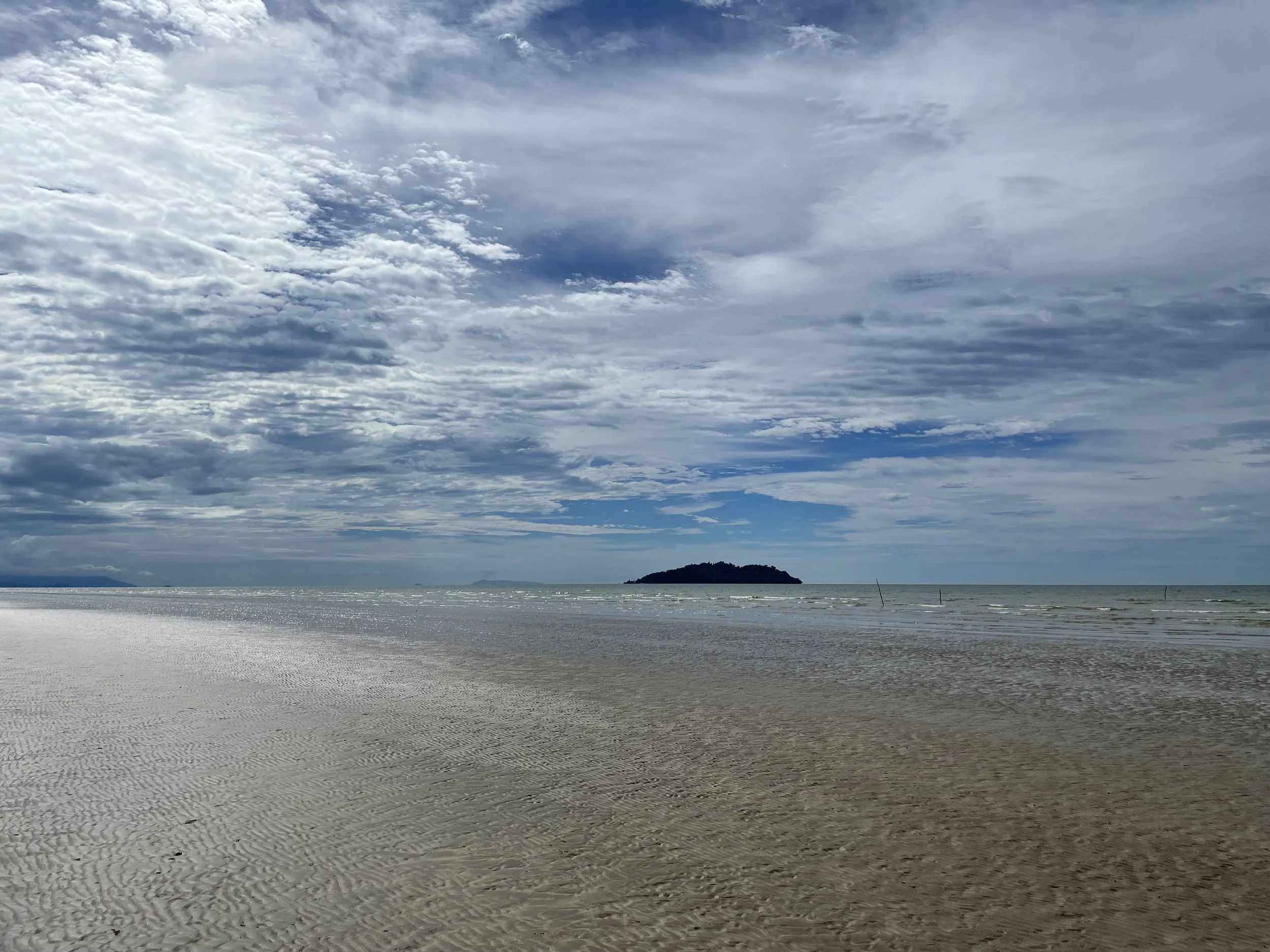
Two of our favourite beaches near Kuching — quiet, largely untouched, and very different from more developed coastal areas.
The drive is beautiful, with great views of Mount Santubong. To reach them, you take a short ferry across the Rambungan River (about 5 minutes and very inexpensive), although a bridge is currently being built.
Trombol sometimes has a few visitors, but Sampadi is often completely empty. Both are great for long walks, but not for swimming as there are often jellyfish. At Sampadi, there’s also a small temple and Buddhist shrine just back from the beach.
Satok Market
A huge weekend market and one of the best places to experience local life. We usually go on a Sunday morning.
You’ll find an incredible range of local fruit and vegetables — many unfamiliar — alongside fresh fish, meat, plants, spices, pets and handicrafts. Busy but manageable, and a really good introduction to everyday life in Kuching. Stall holders are friendly and helpful.
Mangrove & Irrawaddy Dolphin Trip
A boat trip along the Santubong River, passing villages before heading into the mangroves and out towards the South China Sea.
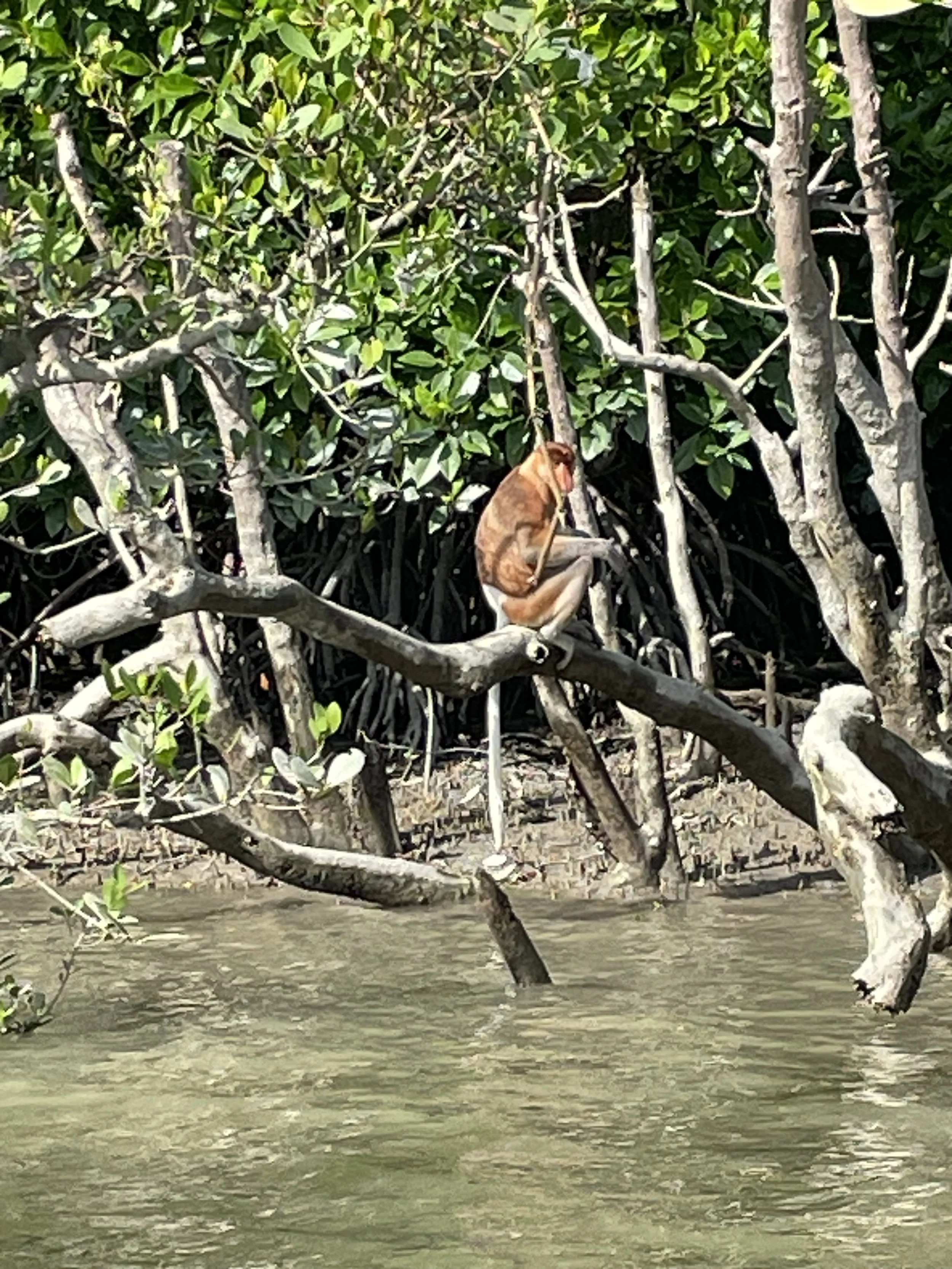
There’s a chance of seeing Irrawaddy dolphins, crocodiles, proboscis monkeys, mudskippers, and a wide variety of birds. Nothing is guaranteed, but it’s a relaxed and scenic experience. We booked our trip through Borneo Adventures.
Bako National Park
One of the most popular national parks near Kuching, about a 45 minute drive then a short boat trip. . Known for its wildlife, coastal scenery, and network of walking trails.
You can visit as a day trip or stay overnight in basic park accommodation. Trails vary in length and are sometimes closed due to weather, so it’s worth checking in advance.
One of the best places in the area for wildlife and coastal scenery — proboscis monkeys, beaches, mangroves, and jungle trails all in one place. Good footwear, water, and insect repellent are essential, and wildlife sightings — including proboscis monkeys — are common.
Entry is relatively inexpensive but you also need to factor in transport and boat costs and as of 2026, it’s mandatory to have a guide. Have a look at the national park website for more information..
It’s a bit more effort than some of the other options, but if you’re interested in wildlife and hiking, it’s definitely worth it.
Cove 55
A boutique hotel on the road towards Damai and Mount Santubong, and one of our favourite places to bring visitors.
It has a calm, understated luxury feel, with an infinity pool overlooking the sea and a relaxed, well-designed setting. Even if you’re not staying, it’s well worth stopping for lunch.
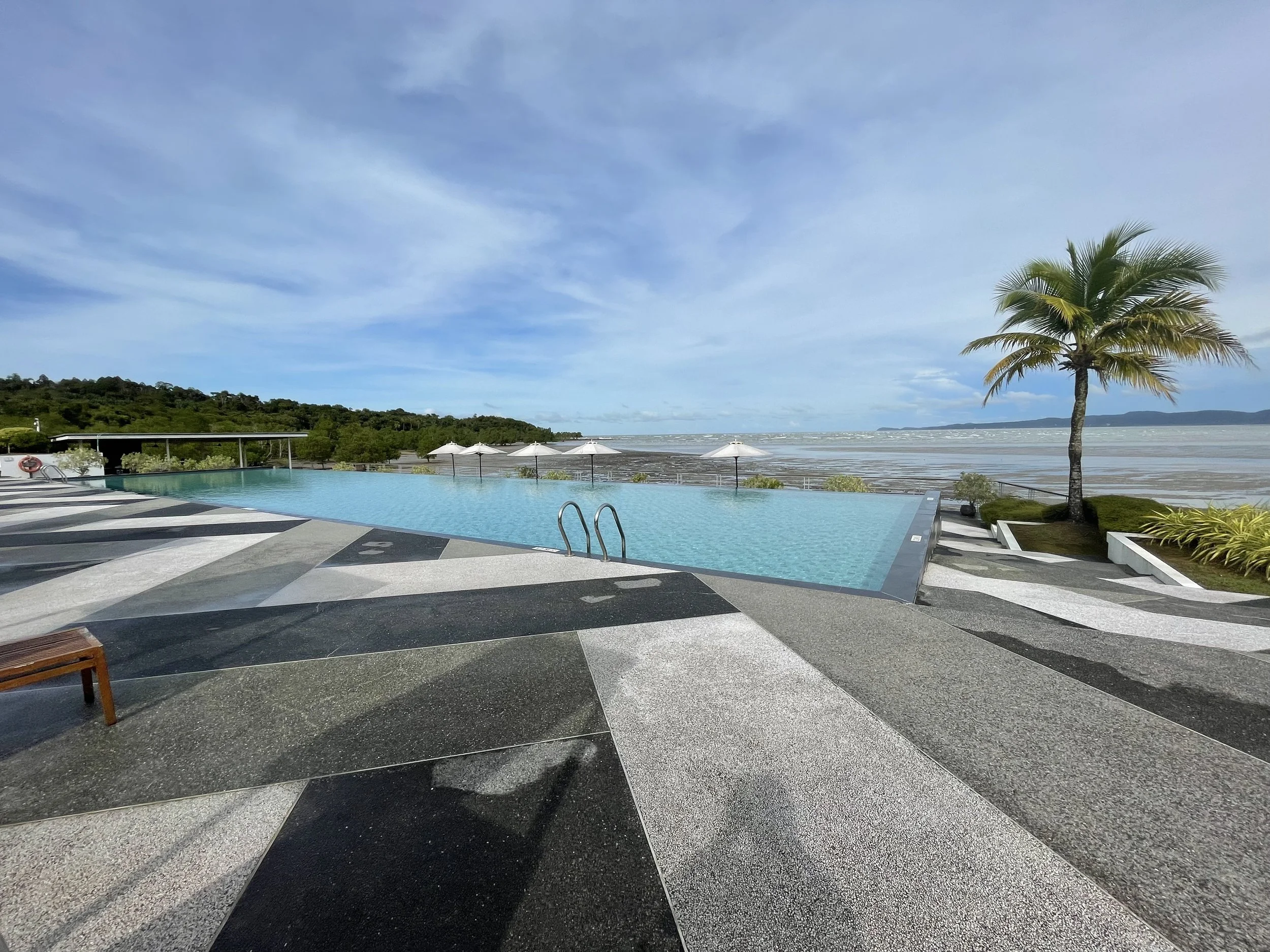
The food blends local and international options, the service is excellent, and it’s a perfect place to sit and relax for a couple of hours — especially after a morning at the Cultural Village. They serve some exquisite mocktails!
Other Things to See and Do
If you have more time or are more adventurous, there’s plenty more to explore around Kuching — some of these are worth planning in, others are more “if it fits” depending on your trip.
Heritage Bike Tours
A really good way to get your bearings early in your stay. These small-group tours take you through the old town, along the waterfront, and into quieter backstreets you’d probably miss on your own.
They’re relaxed and informative rather than intense, and a nice way to understand the layout of the city in a couple of hours.
Borneo Highlands / Gold Mine Cycling
Around 1–1.5 hours from Kuching, heading up into the hills near the Indonesian border.
This is a more adventurous day out — a mix of cycling and exploring old gold mining areas, with some great scenery along the way. Best if you want something active and slightly off the usual tourist route.
Bike & Cooking Tour
Usually based in Kuching itself. You’ll cycle through local neighbourhoods and markets, then take part in a cooking class.
It works well because you see where the ingredients come from before actually using them — a bit more immersive than doing a cooking class on its own.
Gunung Gading National Park
Around 1.5–2 hours from Kuching.
Best known for the Rafflesia, the world’s largest flower — but it only blooms for a few days at a time, so it’s very much luck and timing.
Even without the flower, it’s a good rainforest park with waterfalls and walking trails. A solid option if you want a nature day but don’t want to go as far as Bako.
Brooke Gallery (Fort Margherita)
Right across the river from the waterfront (short boat ride).
A small but well-done museum about the Brooke family (the White Rajahs). Worth doing if you’re interested in the history of Sarawak — easy to combine with time in town.
Ranee Museum
In the Old Court House in Kuching.
Focuses on Margaret Brooke and gives a more personal angle on Sarawak’s history. Smaller than the Brooke Gallery but nicely presented and easy to include as part of a walk around the city.
Cat Museum
About 15–20 minutes from the centre.
Slightly quirky but quite fun — especially if you have children. Kuching literally means “cat,” and the museum fully leans into that.
Mount Santubong
Around 35–40 minutes from Kuching.
A challenging hike — steep, humid, and not for beginners — but very rewarding if you’re up for it. Views from the top stretch over the coastline and rainforest.
Best started early in the morning. The trail is marked but you must register at the national park before beginning.
Annah Rais Longhouse & Hot Springs
Around 60–90 minutes from Kuching.
A good combination trip. The longhouse gives an insight into traditional Bidayuh community life, and the nearby hot springs are simple but a nice place to relax for a while.
Fort Margherita, Chinese Museum and Upside Down House
Easy to include while exploring the waterfront.
Fort Margherita – historic fort with views over the river
Chinese Museum – small but interesting, focusing on the Chinese community in Kuching
The Upside Down House - the name says it all
Good for filling a couple of hours without needing to travel far.
Friendship Park
About 10–15 minutes from the centre.
A landscaped park reflecting the relationship between China and Malaysia. Best visited in the evening when it’s lit up — pleasant rather than essential.
Reservoir Park
Closer to the city centre.
One of the nicest green spaces in Kuching, with shaded walking trails and a more local feel. Good if you want a quieter break from sightseeing.
Crocodile Farm
Around 30 minutes from Kuching.
A straightforward attraction — interesting if you’ve never seen crocodiles up close, but probably not a priority if your time is limited and definitely a zoo and performance feel.
Longhouse Visits
These can vary a lot depending on where you go. Some are more set up for visitors, others feel more authentic.
Usually part of an organised trip and often combined with other activities. Worth doing if you’re interested in traditional ways of life, but it’s worth choosing carefully.